The Fatigue Clinic: You're Going to Leave With a Plan. A Real, Realistic Plan.
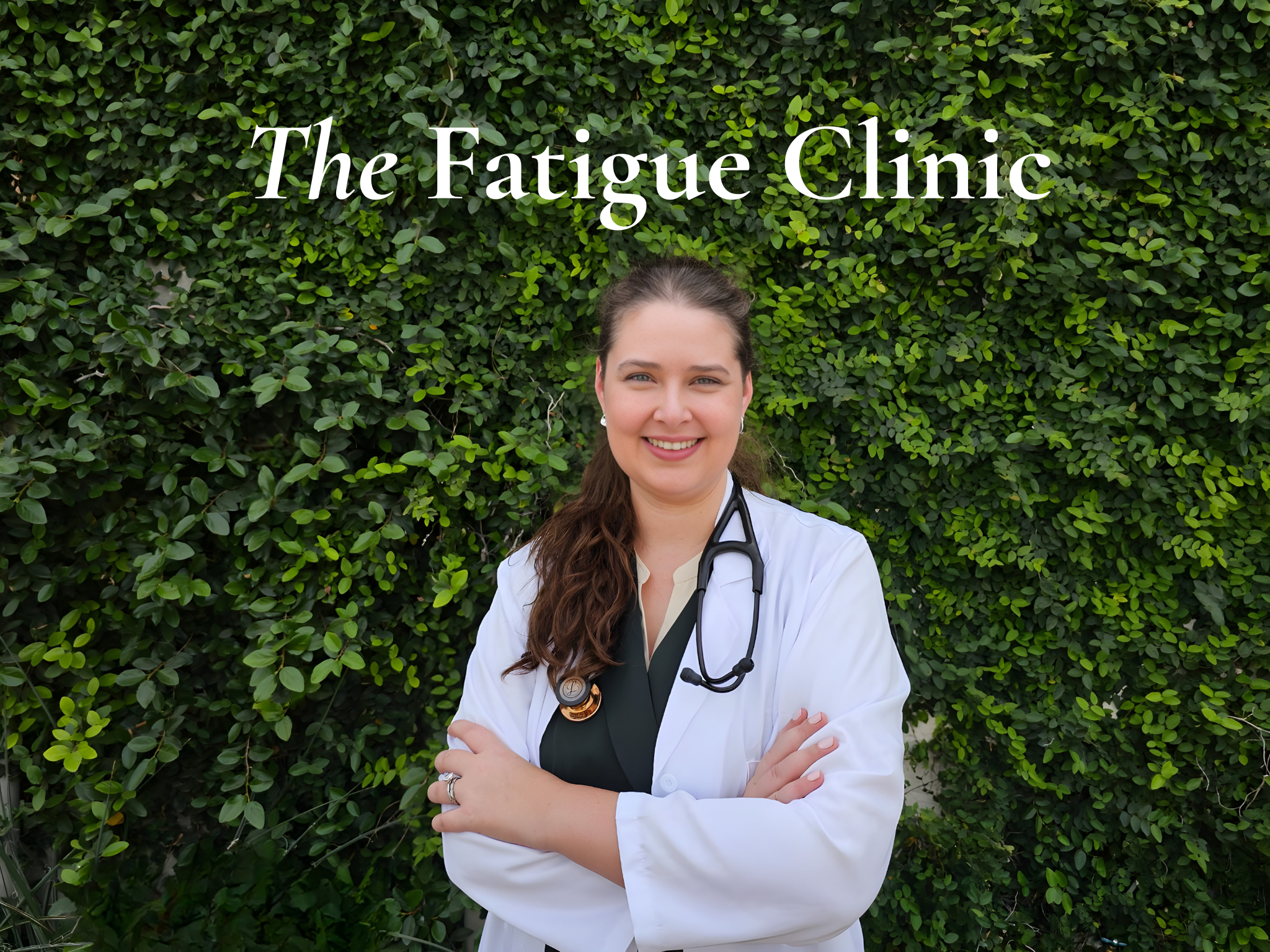
Most people who find The Fatigue Clinic have already been somewhere. Several somewheres. They've had the appointments, the labs, the referrals. They know exactly what a medical visit feels like.
Fifteen minutes. A few questions. Normal labs. A printout suggesting they sleep more and stress less. A follow up in three months if anything changes, which it won't, because nothing changed.
This is not that.
Here is exactly what happens when you become a patient at The Fatigue Clinic.
Before You Ever See Me
Before your first appointment, Joshua calls you.
Joshua is my husband. He is also, depending on the day and what the situation requires, our front desk and our health coach. He wears both hats. Sometimes simultaneously. We are a small operation and he is very talented.
(Front desk Joshua: confirms your appointment, explains how the clinic works, answers your questions, makes sure the technology functions so your first visit isn't forty minutes of "can you hear me now." Health coach Joshua: more on him later. He's important.)
The point is: someone calls you before you ever see me. A real person. To make sure you're not walking into something unfamiliar and unsupported.
Then you fill out the intake forms. All of them. Because I read them before we meet. Every single thing you write, I have already thought about before you and I are in the same virtual room together.
This is not how most visits work. It should be. Moving on.
The First Visit
Sixty minutes. You and me.
I ask a lot of questions and I listen to the answers. Not to the answers I'm expecting. To what you actually say. There is a difference and most people who have been dealing with chronic fatigue for any length of time know exactly what it feels like when a physician is listening for confirmation versus listening for information.
I am listening for information.
There are eight categories of fatigue drivers. Some require labs. Some don't. In our first visit we work through the four buckets that don't need bloodwork: sleep architecture, nervous system activation, cognitive load, and neuropsychological contributors. These are the categories medicine most consistently skips because they don't have a clean billing code and they require time to uncover properly.
Which is, coincidentally, exactly why we have sixty minutes.
By the end of the first visit you have something most exhausted patients have never had. A physician who has mapped half the picture, has a plan for the other half, and has not once suggested you try yoga.
Between Visits
I go away and think. Radical concept, I know.
I review everything you told me, everything in your intake, everything we covered. I build an evidence-based plan. Not a generic fatigue protocol printed off a wellness website. A plan for your specific combination of drivers, your specific life, your specific capacity right now.
This might include lab work for the second visit. It might include an at-home sleep study if the picture points there. It might include supplements or medications with actual evidence behind them, creatine, low dose naltrexone, others depending on what we find. It will almost certainly include a fatigue snowball plan, borrowed from Dave Ramsey because it works.
The snowball plan is exactly what it sounds like. Small, high-value changes that build on each other. Because the genuinely cruel thing about fatigue is that the interventions most likely to help require energy you don't currently have. We start with the things that cost the least and return the most. We build from there. Slowly. On purpose.
The Follow Up
The second visit covers the four more medical buckets: hormonal and metabolic function, nutritional and blood drivers, immune and inflammatory burden, and complex fatigue disorders. If we have labs back, we go through them properly.
Not "your TSH is normal, you're fine." The actual numbers. What they mean. What the evidence says about optimal ranges versus reference ranges, which are two different things that medicine has been quietly conflating for decades. What we're going to do about it.
If I have everything I need, the complete plan is ready at this visit. All eight buckets, addressed in order of clinical priority, with a pacing structure that accounts for the life you're actually living. Not the theoretical one where you have unlimited time, energy, and a personal chef.
What Comes After
This is the part that's different from every other model, and my personal favorite:
For the first month, you have unlimited access. Message the clinic any time and we'll get back to you quickly. And then there's Health Coach Joshua.
(Health Coach Joshua: follows up with you every single week. Checks what's working, what isn't, what needs adjusting. Keeps you from falling through the gap between appointments, which is where most treatment plans go to die quietly and without ceremony.)
You are not handed a plan and wished luck. You are supported through the actual implementation of it. Because the gap between knowing what to do and doing it is not a willpower problem. It is a support problem. Medicine has been outsourcing that gap to patients for decades and quietly blaming them when they couldn't manage it alone.
We are not doing that here.
If you continue with a monthly membership, we keep going. Regular check ins with me for next steps and adjustments. Weekly or biweekly depending on where you are and what you need. The frequency changes as you improve. That's the goal, after all. Not to keep you in the clinic forever. To get you to the point where you don't need us as much.
That's a strange business model, we know. We're going with it anyway.
Who This Is For
The person who has been everywhere and has no coordinated picture.
The person whose labs are normal and has been told that's the end of the investigation.
The person who has a diagnosis, takes the medication, and still feels exactly like nothing has changed.
All three are welcome here. All three have been failed by a system that didn't have sixty minutes to give them. We do.
The quiz at thefatigueclinic.org takes four minutes. It won't diagnose you. It will give us somewhere real to start.
We are accepting patients in California, Oregon, and Washington.
You don't have to figure this out alone. That is, genuinely, the whole point.
Alissa Goodwin, MD. Board certified in family medicine, tired for twelve years, accidentally an expert, now willing to use those powers for good.
P.S. If you've been managing your fatigue alone for years because no one offered you anything better, I want you to know that wasn't your fault. And it doesn't have to stay that way.